AI
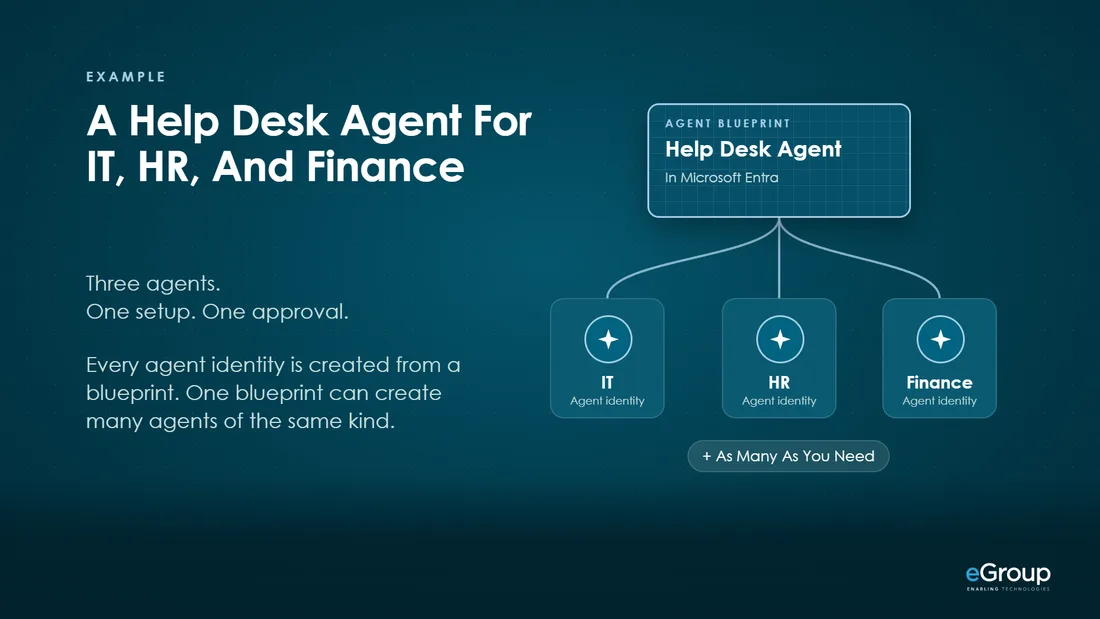
Agent 365: How Agent Blueprints Work
An agent blueprint lets you set up a kind of AI agent once, approve its permissions once, and control every agent made from it. Here's what a blueprint holds, how a permission reaches an agent, and how to create one with the Agent 365 CLI.
AI
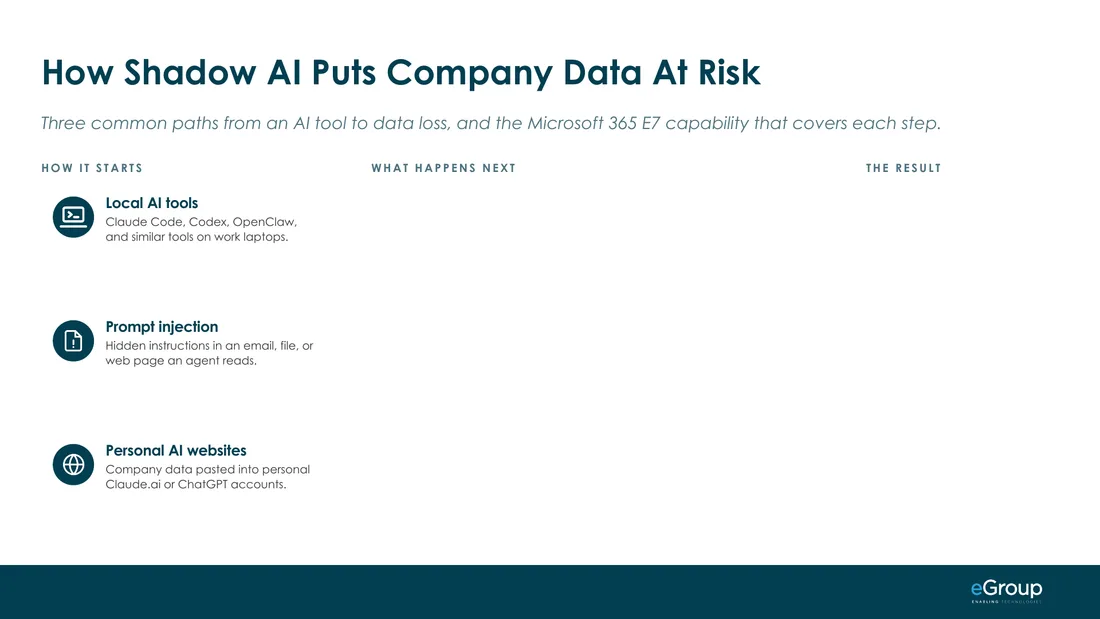
AI Governance: How Shadow AI Puts Company Data at Risk
Shadow AI gets to company data along a predictable path with three common ways in. Here's the path, the Microsoft control at each step, and which license each one comes with.
AI
What Microsoft's September Copilot Update Means
Microsoft's September 25 Copilot update brings Chat, Cowork, and Office into one app, adds new ways to build and run apps and agents, and splits pricing into two models. I walk through what was announced, when each piece arrives, and what I think it means for organizations already on Microsoft 365.
AI
Agent 365 CLI Setup No Longer Needs a Custom App Registration
Microsoft now manages the app the Agent 365 CLI signs in with, so connecting a new agent to Agent 365 no longer starts with a five-step Entra app registration. Here's what the CLI does, what changed, and how AI can run the setup with you.
Microsoft 365
M365 Maturity Model: Where Does Your Organization Stand?
Most organizations adopt Microsoft 365 in the same order, and each level builds on the one before it. Here's the model I built from hundreds of roadmap conversations, and how to use it whether you own the licenses, are weighing the next tier, or face a renewal.
Microsoft 365
Pay-by-Consumption Is Here. Here's How You Stay in Control.
Copilot Cowork went usage-based on June 16. It's difficult to reliably estimate a task's cost before it runs. Here is a copy-paste prompt to run in Copilot Chat before you commit a task to Cowork.
AI
What Microsoft Agent 365 Actually Does for a Custom Agents (Claude)
Your developers are going to build AI agents on whatever model fits the job. Agent 365 gives those agents a real identity in Entra, Conditional Access targeting, Purview visibility, and eDiscovery coverage, even when the model underneath is something like Anthropic Claude. What works today, what the licensing actually costs, and what to plan for.
Security
Azure Day 2026 - Recap: A Practical Tour of Defender for Cloud (and Where to Start)
Most organizations own more Defender capability than they have actively turned on. From Phil Kinsley's roadshow session: what Defender for Cloud actually is, why CSPM is the place to start, what makes the paid tier worth the upgrade, and the data-readiness conversation that is taking over half of his calendar.
Security
Azure Day 2026 - Recap: Defender Orchestration Is Where Your Security Stack Earns Its Keep
The Defender stack works through the orchestration that sits on top of it. Most mid-market organizations cannot economically run the day-to-day SOC operations in-house. Series wrap from last week's Azure Day roadshow: castle defense, the MXDR economics, and a 90-day sequence pulling the five-post series together.
Microsoft 365
Azure Day 2026 - Recap: Endpoint Strategy in 2026 With One Plane and Three Delivery Models
Microsoft is collapsing physical PCs, virtual desktops, and Cloud PCs into a single management plane. The job for IT is matching the right delivery model to each user type and getting off the duplicate tools and processes that come from running two of everything. From Dustin's session: how to pick between Intune-managed devices, AVD, and Windows 365, plus what is coming next on the roadmap.
Azure
Azure Day 2026 - Recap: The Cloud Foundation Decides What Is Possible Everywhere Else
Every Azure environment I see succeed has done the unglamorous foundation work first. From last week's Azure roadshow: the five questions IT leaders are actually asking about Azure in 2026, the three failure modes that wreck adoption, and how the Cloud Adoption Framework plus landing zones answer all three.
Azure
Azure Day 2026 - Recap: The Real Value of Cloud Modernization Is What You Leave Behind
Cost savings in nearly every Azure case study come more from the things that stopped running than from the things that landed in the cloud. From Dustin Meany's roadshow session: where technical debt actually comes from, the five modernization patterns that move the needle, and why modernization is the precondition for every meaningful AI conversation.
AI
Copilot Cowork introduces Mobile Experience, Enterprise Plugins, and Skills
Microsoft shipped Skills, plugins, and a real mobile experience for Copilot Cowork yesterday. The capabilities have lived in private agents for a while; what's new is that they now run inside Microsoft 365, governed by the identity and security plane you already trust. Here is what each of the three updates enables in practice.
Azure
Azure Virtual Desktop Hybrid Public Preview - AVD in the Data Center
Microsoft's new AVD Hybrid public preview lets your session hosts run on existing on-prem hardware while the AVD service stays in Azure. Solving those challenging use cases while allowing for VDI modernization.
Microsoft 365
Windows 365 Reserve: A cost effective approach to Desktop Disaster Recovery
Most disaster recovery plans handle servers and storage well and stay quiet on what happens to the user whose laptop just got encrypted, stolen, or stuck in shipping. Windows 365 Reserve, generally available at $20 per user per year (MSRP), gives endpoint BCDR a practical answer that doesn't require always-on capacity or a closet full of loaner laptops.
AI
The Architecture of Autonomy - Microsoft Agent365
Understanding Microsoft Agent 365 and what it's intended use is.
Microsoft Licensing
Microsoft 365 E7: A Practical Breakdown
Microsoft 365 E7 dropped this month. The question every IT leader is asking: do we need it? A practical breakdown of what's in the bundle, the Entra Suite consolidation opportunity, why SharePoint Advanced Management is the AI Governance lever most teams don't know they need, and who should buy it now versus wait.
AI
I built PowerPoint in under 30 minutes
I needed a presentation that PowerPoint couldn't easily build. So I wrote a real spec, handed it to an AI agent, and 30 minutes later I had a presentation engine that does what I actually want. Here's what that says about every other tool you're paying for.
AI
Software Just Got More Accessible and It Changes a Lot
A CFO needs a client-profitability view five minutes before her board meeting. A year ago that's a ticket to the analytics team. Today it's a Copilot Cowork prompt. The implications for what mid-market companies should buy, build, and stop paying for are bigger than most are pricing in.
Microsoft Licensing
Microsoft introduces Licensing Mobility to CSP for Windows Server and SQL Server
This is a tactical post because it solves an annoying problem that created complexity and confusion with licensing. At the end of the day, this helps you remove that complexity and is worth looking at before you renew Microsoft licensing with SA the way you always have.
A Prompt Technique That Works Really Well with Microsoft Copilot Cowork - The Interview
There's a prompt technique I've migrated to Copilot Cowork now that it is available this week that gives me better results for almost any task.
Your M365 Declarative Agents Just Got Smarter But You Need to Retest Them
Every declarative agent running in your M365 tenant just got better. Microsoft upgraded the model powering Declarative Agents in M365 Copilot to GPT-5.2, and if
The Gantt Chart That Built Itself
Like many, Copilot Cowork became available in our Frontier Microsoft 365 tenant today. I decided to give it a simple, yet beneficial, task. I had Three group chats from recent stakeholder meetings and
Of Course It's AI
AI doesn't generate my opinions. I bring a point of view, use AI to check it, fill gaps, and move faster. The tool doesn't replace thinking. It accelerates it.
Security
They Didn't Break In. They Logged In.
The Stryker cyberattack is a useful case study for any IT leader running Microsoft 365 and Intune. Attackers obtained valid credentials, escalated to Intune Admin, and used Intune itself to wipe devices at scale. No malware. No exploit. Just a logged-in attacker with the right access.
AI
Copilot Notebooks Is Microsoft's Answer to NotebookLM. For Enterprise Teams, It's the Better Choice.
Google's NotebookLM proved that grounding AI in specific sources produces dramatically better output. Microsoft built the same concept inside the M365 trust boundary. Here's what Copilot Notebooks actually are and where they deliver real enterprise value.
Microsoft 365
M365 is a set of capabilities, not products. You need to implement it.
Most mid-market organizations pay for Microsoft 365 E3 or E5 and use maybe 30% of it. The gap between what you pay for and what you get is an implementation problem, not a licensing problem.
ai
Running OpenClaw on your machine is a risk
I've been running OpenClaw for a while. It's useful in ways most AI tools aren't. It's also risky in ways most people don't think about before they start. Here's what I've learned about running it responsibly.